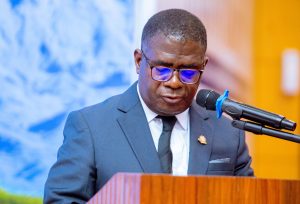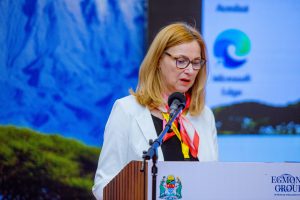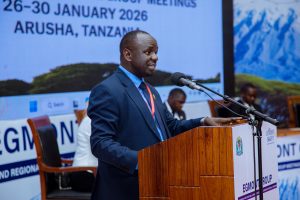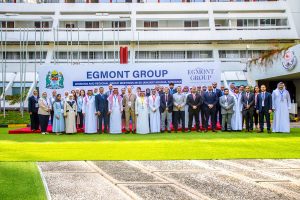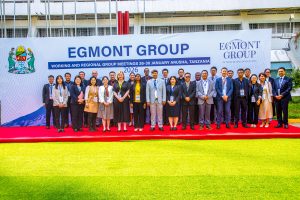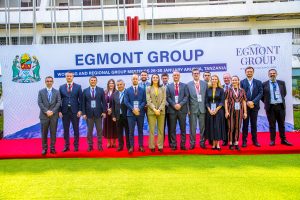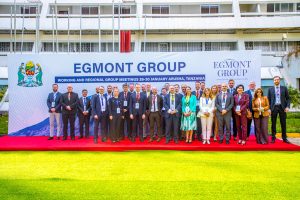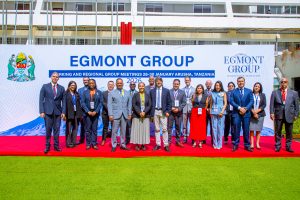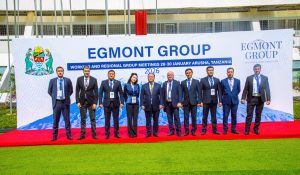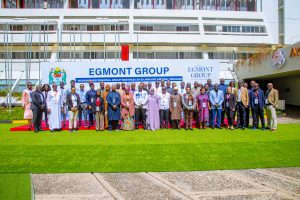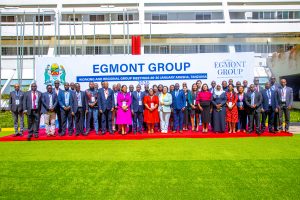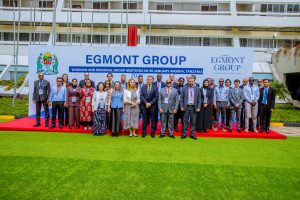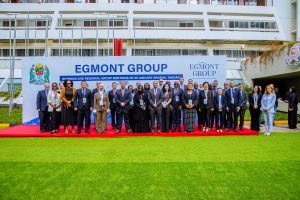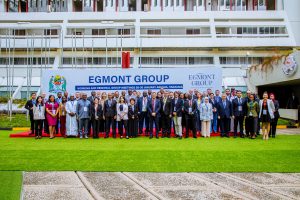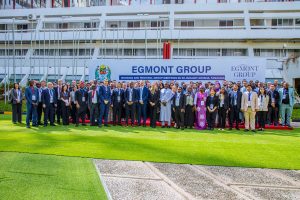



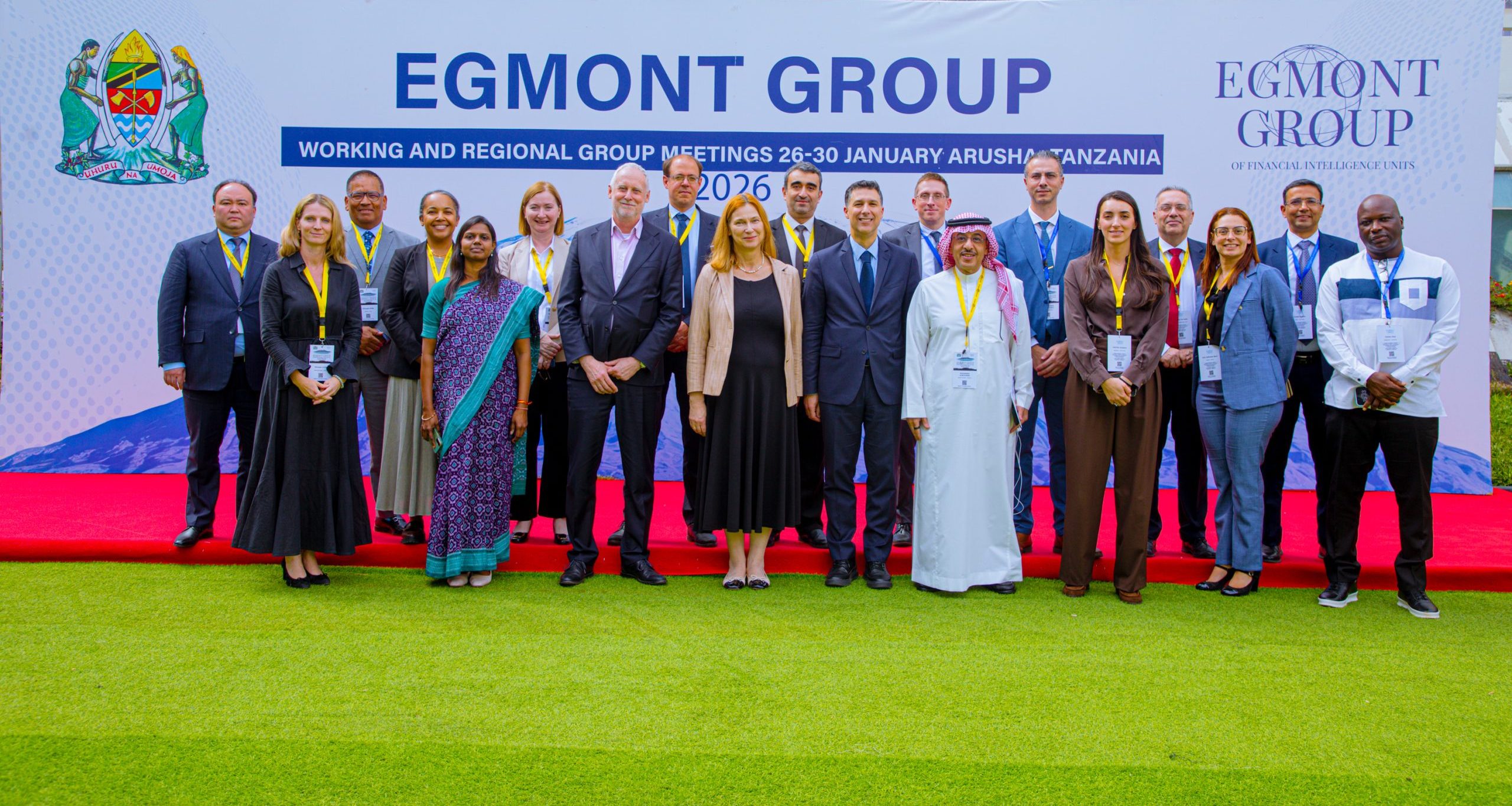
Arusha, Tanzania – The annual Egmont Group Working and Regional Group Meetings convened from January 26 to 30, 2026. The annual event brought together around four hundred delegates from Egmont Group member FIUs, international partners, observers, and guests from academia who participated in meetings and workshops hosted by the Financial Intelligence Unit Tanzania. The Egmont Group was honoured to welcome the Minister for Finance, Tanzania, Hon. Khamis Mussa Omar, who was represented by the Deputy Minister for Finance, Mr. Mshamu Ali Munde as well as the Deputy Governor for the Bank of Tanzania, Ms. Sauda Kassim Msemo.
Throughout the week, member FIUs signed 7 new Memoranda of Understanding that expanded the global network of secure pathways for exchanging financial intelligence on money laundering and terrorist financing matters.
FIUs continued to prioritize secure and effective information exchange. The Egmont Committee reviewed updates on the Egmont Secure Web (ESW), including progress on data matching implementation, infrastructure enhancements, and the results of security audits and pilot activities. Committee discussions highlighted the importance of technology modernization, responsible and effective use of AI, and maintaining strong standards of confidentiality, integrity, and availability within the ESW.
Advancing FIU Operational Independence and Autonomy
A major milestone last year was the decision by Heads of FIU to elevate the principles of operational independence and autonomy to formal Egmont Group requirements. Following their adoption in Luxembourg in July 2025, work is underway to develop guidance to support FIUs in implementing the new requirements within their national frameworks. An update on the development of this guidance was provided to Heads of FIU last week, reflecting ongoing efforts to assist FIUs in operationalising the agreed standards.
Working Group and Regional Group Achievements
All four Egmont Working Groups and eight Regional Groups advanced their business plans and held thematic discussions throughout the week.
Working Groups
-
The Information Exchange Working Group (IEWG) discussions focused on the strategic evolution of FIUs in a changing AML/CFT environment, including the growing role of technology, data integration, and innovation. This included examination of advanced technologies such as artificial intelligence, machine learning, blockchain analytics, and secure information exchange, as well as the future role of IT within the Egmont Group.
-
IEWG approved the inclusion in its Business Plan of a new project focused on the operational and strategic application and development of Joint Analyses between FIUs.
-
The Membership, Support, and Compliance Working Group (MSCWG) discussed four (4) membership applications and concluded that three (3) of them meet all the Egmont membership criteria and will be recommended to the HoFIU in Baku, Azerbaijan (July 2026). The pending application will be discussed out-of-session to confirm that it also meets the pending membership criteria.
-
MSCWG discussed two (2) compliance action plans submitted by FIUs to address their non-compliance with specific Egmont requirements. One of these action plans containing clear deliverables and timelines was approved by the MSCWG, and the Working Group is expecting to approve the other one out-of-session in the upcoming weeks.
-
The Technical Assistance and Training Working Group (TATWG) delivered a pilot training course on International Exposure of FIUs, focusing on the soft diplomatic skills of FIU representatives in international fora.
-
TATWG approved the concept notes for three new projects: the Revamp of the Operational Analysis Course, and on the topic of Open-Source Intelligence Use in FIU Operations, as well as the future delivery of a Joint Webinar with the International Association of Prosecutors on “Enhancing Informal International Cooperation. The group also discussed the first draft of a new TATWG/ECOFEL Support Policy.
-
TATWG focused on emerging and priority threat areas, including environmental and wildlife crime, and exchanging training programs from FIUs and observers.
-
The Policy and Procedures Working Group (PPWG) addressed policy and procedural issues, including guidance on FIU autonomy and operational independence, data‑based policy making, and the review of governance and partnership frameworks.
-
PPWG examined cooperation with observers and international partners, alongside revisions to terms of reference and selection procedures for Egmont Group Chairs and Vice-Chairs to strengthen institutional effectiveness.
-
IEWG and PPWG received presentations on the continued development of Egmont Group platforms and services, including ESW, communications and ECOFEL, which featured prominently across working group discussions.
Regional Groups
-
The Americas Regional Group approved its 2026-2027 Regional Plan, which includes four (4) projects to be implemented by July 2027.
-
The Americas Regional Group also had technical discussions on the Role of FIUs under the current round of Mutual Evaluations, as well as on their role to fight transnational organized crime.
-
The Asia-Pacific Regional Group (APRG) held a thematic discussion in preparation for the 2026 Egmont Group Plenary.
-
The APRG also received presentations on several topics, such as the developments in artificial intelligence, focusing on specific risks and perspective, child sexual exploitation, tackling illegal wildlife trade, and recent trends in terrorism, drawing on insights from the Global Terrorist Trends and Analysis Center.
-
Additionally, the APRG received a Cryptocurrency discussion on sharing case studies to support the development of a regional crypto typology repository (FIU Australia).
-
Finally, the APRG received a case study presentation on fundraising using social media platforms and cryptocurrencies (FIU Türkiye).
-
The Eastern and Southern Africa Region (ESA) received a presentation from Egmont Group observer UNODC.
-
The ESA also received presentations on the Basel AML Report (FIU Malawi), recent AML/CFT developments (FIU Angola) and on cyber‑enabled fraud threats (FIU Ethiopia).
-
The Eurasia Region received a presentation on AML/CFT risks and trends (FIU the Kyrgyz Republic).
-
The Eurasia Region also discussed feedback on matters arising from previous meetings, pertinent issues discussed at Egmont Committee meetings and finally Election of Regional Representatives.
-
Europe I received presentations on selected thematic issues, emerging risks, and analytical developments relevant to FIU work including online gambling (FIU Greece), AI and machine learning tools (FIUs Malta and Nigeria), evolving analytical approaches used in financial intelligence work (FIU Estonia), and a thematic case study on financial crime methodologies (FIUs Germany and Luxembourg).
-
Europe I also discussed EPPO-related matters and Article 80 AMLR threshold-based reporting obligations.
- In addition, Europe I received an overview of conceptual work related to the development of analytical tools to support financial intelligence functions, presented by FIUs France and Spain.
-
Europe II held a dedicated thematic discussion on mitigating unintended consequences and abuse of FATF standards for nonprofit organisations providing legitimate humanitarian assistance with four FIUs from West and Central Africa and Europe II and UNODC. The region will continue to focus on IT solutions and role of artificial intelligence in financial intelligence, with support of private partners.
-
The Middle East and North Africa (MENA) Region received updates on the Riyadh Initiative on Public-Private Partnership’s (PPP) and the MENA Regional Business Plan. The region also received an update on MENA membership applications.
-
The West and Central Africa (WCA) Region discussed membership support for candidate and new member FIUs.
-
WCA also received a presentation on a joint WCA–MENA project (FIUs Nigeria and Senegal).
-
FIU experience sharing was held in the WCA meetings (FIUs Benin and Ghana).
-
The WCA region conducted the selection of a new Regional Representative.
-
WCA also received presentations from technical assistance partners, including SecFin, GIZ, and Open Ownership, as well as updates on recent activities from the TATWG and the IEWG.
Additionally, many regions also received updates on Egmont Group tools and services including regional perspectives on recent ESW developments, communications and ECOFEL activities.
Egmont Committee Highlights
During the Committee meetings on January 26 and 29, discussions focused on:
• Developments related to the ESW, including data matching pilots and security enhancements
• Review of ECOFEL’s expanded curriculum, including the development and much anticipated launch of the ECOFEL Certification Program (ECP) and other 2026 program priorities
• Preparations for the Thirty Second Egmont Group Plenary in Baku, Azerbaijan which will focus on evolving Public Private Partnership models
• Enhancing member engagement, including language accessibility and participation approaches
• Coordination of Working Group and Regional Group outcomes and global follow up actions
The Committee also welcomed continued collaboration with international partners including FATF, UNODC, and the IMF across technical discussions, joint priorities, and long-term capacity building efforts.
Selections and Leadership Updates
Throughout the week, additional leadership roles were selected for a two-year term ending after the 2028 Egmont Working and Regional Group Meetings.
Working Group Leadership
Policy and Procedures Working Group (PPWG)
Chair: Mr. Carl Ramagge (FIU Gibraltar)
Vice Chairs: Ms. Elisabeth Brown (FIU UK), Mr. Robin Rawal (FIU India)
Membership, Support and Compliance Working Group (MSCWG)
Vice Chair: Mr. Felix Obiamalu (FIU Nigeria)
Technical Assistance and Training Working Group (TATWG)
Chair: Mr. Konstantinos Konstantinou (FIU Cyprus)
Information Exchange Working Group (IEWG)
Vice Chairs:
Mr. Manish Kumar Hairat (FIU India)
Mr. Scott Bruce (FIU USA – FINCEN)
Mr. Nurlan Babayev (FIU Azerbaijan)
Dr. Christian Nawroth (FIU Germany)
Mr. Asset Arthadik (FIU Indonesia)
Dr. Nnanyelugo M.X. Aham-Anyanwu (FIU Nigeria)
Mr. Yuval Rabin (FIU Israel)
Regional Group Leadership
Eurasia Regional Group
Chair: Mr. Ulan Raissov (FIU Kazakhstan)
West and Central Africa Regional Group
Chair: Mr. Oumar Diop (FIU Senegal)
Acknowledgments
The Egmont Group expresses its appreciation to FIU Tanzania, including the Head of FIU Tanzania, Mr. Majaba Shabani Magana, and his outstanding team, for their warm hospitality and strong organization throughout the week. The Group also thanks Observers and International Partners for their valuable contributions. The Egmont Committee acknowledged the newly selected Working Group and Regional Group leaders and welcomed their service for the years ahead.
Conclusion
The Arusha meetings underscored the importance of practical cooperation, secure information exchange, and evidence-based policy and training in combating money laundering and terrorist financing. The Egmont Group values the dedication of all delegates and looks forward to continued collaboration throughout the year.
Arusha, Tanzania
February 6, 2026
Background:
The Egmont Group of Financial Intelligence Units is a global organization formed by 182 member FIUs established to facilitate and prompt the exchange of information, knowledge, and cooperation among its members. The Egmont Group focuses on three core activities. Firstly, its secure Information exchange platform promotes operational cooperation among members. Secondly, the Egmont Group provides capacity-building opportunities through its structure of working groups along with ECOFEL. Thirdly, the Egmont Group enhances shared knowledge and expertise among members by regularly producing typology reports, red flags, and indicators.
Further Egmont Group information and a list of Egmont member FIUs can be found at egmontgroup.org.