




New resource equips FIUs with financial intelligence insights, typologies, risk indicators, and emerging trends related to environmental crime.
The Egmont Group Information Exchange Working Group (IEWG) has released a new series of Environmental Crimes Bulletins to support Financial Intelligence Units (FIUs) in identifying, analyzing, and disrupting the financial flows associated with environmental crime.
Developed with contributions from environmental crime subject matter experts, the bulletins examine key crime areas including illegal wildlife trade, rhino trafficking, pollution crime, illegal, unreported and unregulated (IUU) fishing, illegal logging and illegal mining and natural resource extraction. The series highlights money laundering risks, criminal methodologies, industries at risk of exploitation, and indicators that may assist FIUs in detecting suspicious financial activity.
Environmental crime is increasingly recognized as a significant source of illicit proceeds for organized criminal networks. Criminals frequently exploit legitimate industries, international supply chains, financial systems, and regulatory gaps to conceal and move funds generated through environmental offences. The IEWG bulletin series explores these financial dimensions, demonstrating how a financial intelligence approach can help uncover networks, identify associated predicate offences, and support law enforcement action.
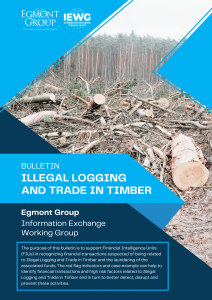
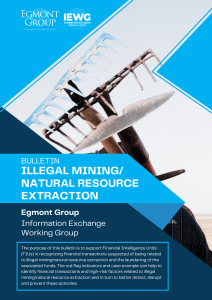
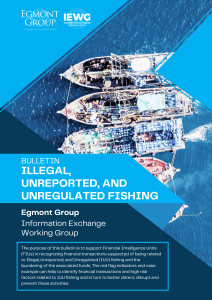
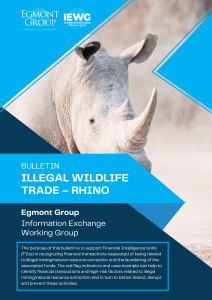
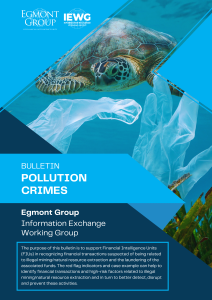
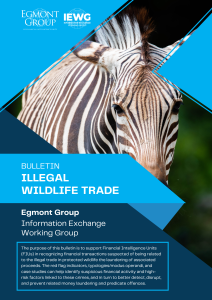
Each bulletin provides an overview of the crime type, examines links to money laundering and related criminal activity, identifies sectors vulnerable to misuse, and presents practical indicators and typologies drawn from international research and case examples.
The publications are intended to enhance awareness and strengthen the analytical capabilities of FIUs confronting these increasingly complex criminal threats.
The Environmental Crimes Bulletin series reflects the Egmont Group’s ongoing commitment to supporting FIUs through knowledge sharing, operational collaboration, and the development of practical resources to address emerging financial crime threats. Members are encouraged to explore the bulletins and incorporate relevant insights into their analytical and operational work.